Thanks to my Constellate Creatives cohort Jill Blocker for reminding me that it’s almost THAT OCTOBER.
I mean, we’re speeding toward October with a strong tailwind and it’s a good time to remind people that my 2025 novel, a YA thriller that I’ve more often than not referred to as a high school crime novel, is out there in the world. Poor little THAT OCTOBER, which has been out for 15 months-plus now, has taken a backseat to my promotion of SEVEN ANGELS, which came out three months ago.
But THAT OCTOBER – set in October 1984 – is a good fall season read, with Halloween, Elvira Mistress of the Dark on MTV, football, the TERMINATOR and peak 1980s pop music as the mood overlaying the crime story at its heart: When a classmate is killed and another disappears, six high school friends – frustrated by how lackadaisical the adults in town are acting – decide to investigate on their own with the hope of solving their friend’s murder and bringing another friend home.
Along the way, they stumble upon dark secrets not only in their town but also in their own families.
The wonderful author Heather Levy said THAT OCTOBER was “perfect for fans of STRANGER THINGS,” although the only monsters in my novel are the human kind.
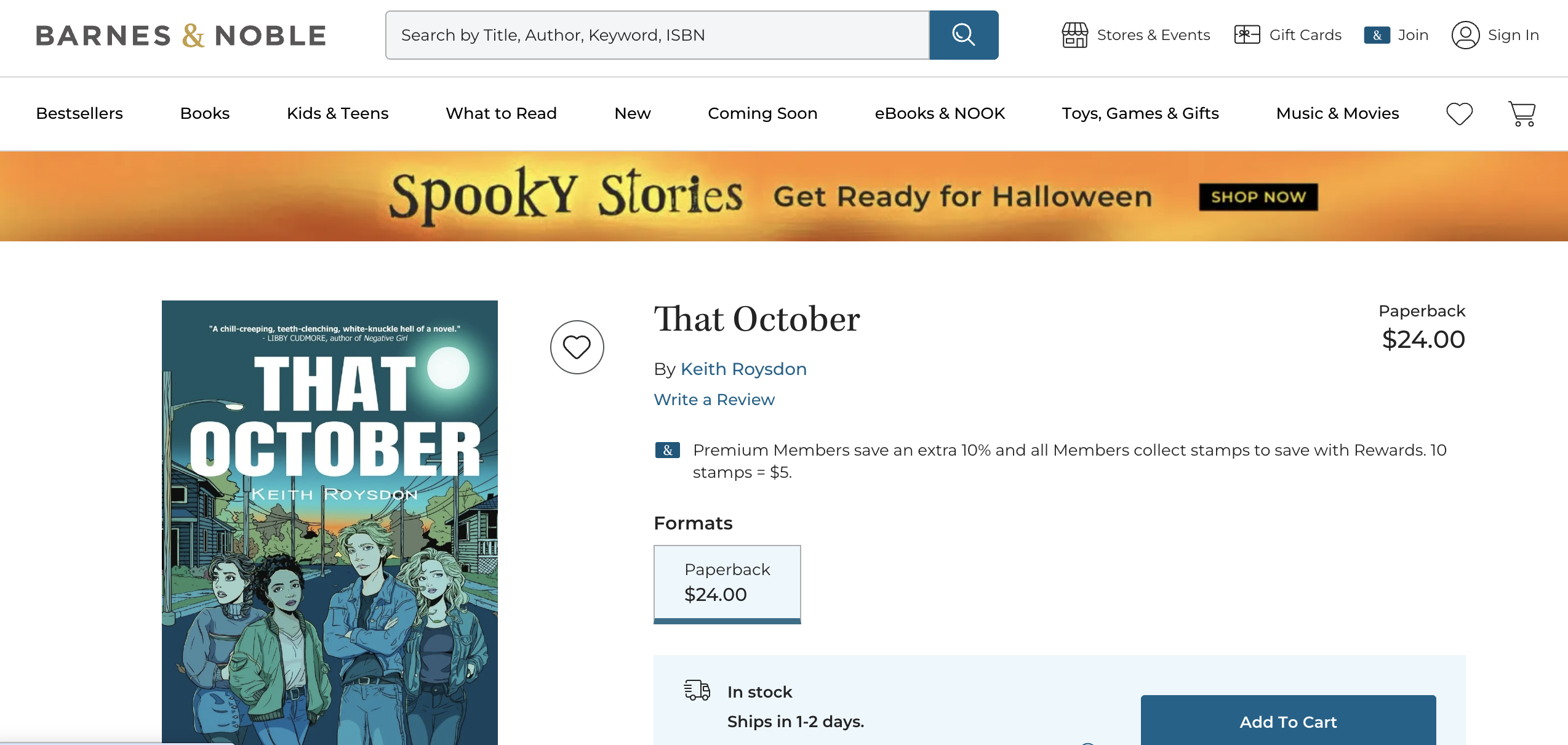
You can find THAT OCTOBER literally anywhere books are sold. Here are some salient spots:
Ink Drinkers Anonymous, the Black-woman-owned bookstore in my hometown of Muncie, Indiana, through bookshop dot org.
So does Amazon, which offers it in paperback or ebook.
And The Hive Bookshop, my friendly neighborhood bookstore here in town. The Hive has signed copies, as does Ink Drinkers and Aw Yeah Comics, the latter two in Muncie, Indiana.
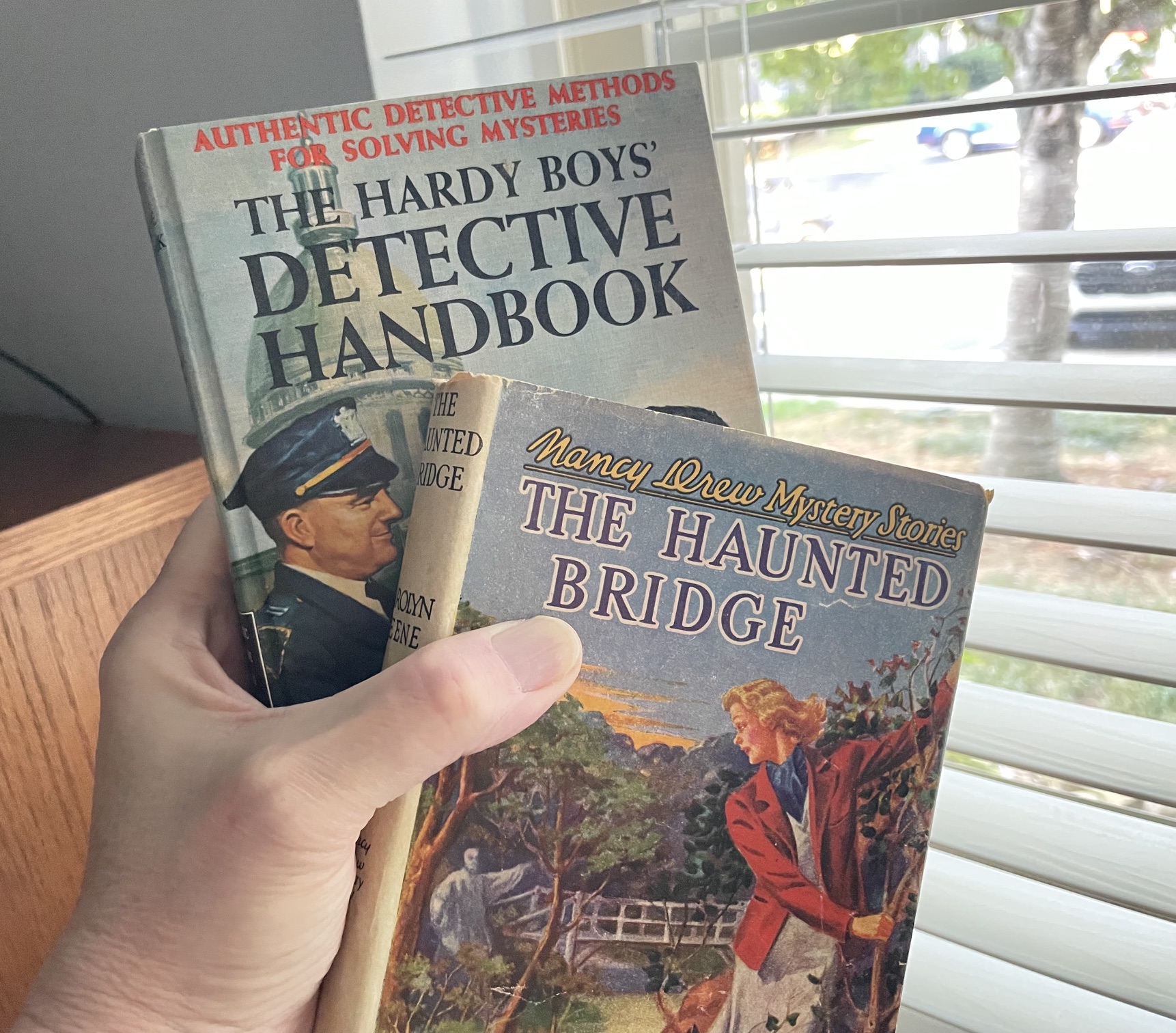
How about a two-for-one today? Okay then, buckle up for quick items on my citation of the late fashion designer Bob Mackie in a new short story as well as the Mystery of Why Public Libraries Didn’t Carry Nancy Drew and Hardy Boys Books. Lets start with the vintage stuff first:
I’m on the record about my love of juvenile mysteries like those featuring the Hardy brothers, Nancy Drew and the Three Investigators. Six years ago – and I can’t believe it was that long ago – I wrote a piece for CrimeReads about devouring those juvenile mysteries when I was a kid in the 1960s and 1970s and specifically credited my school library and beloved librarian in encouraging young readers to read a little bit of everything. Here’s a link to that CrimeReads piece to check out after you’re done here.
So considering how my school library encouraged us to read everything, including the Hardys and Nancy, I felt sad to see a September 10 post in the Hardy Boys and Nancy Drew Mysteries Facebook page that noted that libraries – public libraries certainly but sometimes school libraries – didn’t carry the books. And many librarians considered them trash.
I think – I hope – the prevailing sentiment in recent years has been to encourage young readers to read, no matter what, because instilling a love of reading is more important than being a snob.
The Facebook post has hundreds of comments from people who said that, yes, unfortunately, their libraries didn’t carry the books.
This wasn’t just a coincidence, scholar James D. Keeline wrote. There was, particularly in the first half of the 20th Century, a coordinated effort by some to keep those books and other series books out of libraries.
From the 1940s through the 1970s, the librarian school programs had an organized method to exclude popular series books from school and public libraries. They started to exchange lists of books “not to be circulated” in “standard libraries.” These were published in regional library journals. These lists were devoted to series authors and series.
Even in the late 1970s through the 1990s this practice continued in SOME libraries. Other libraries were led by people who had grown up reading books like Nancy Drew and did not find them harmful, despite the librarian training. So the practice of excluding series books reduced but was still present in places like San Francisco in the late 1990s.
Keeline produces a list of dozens and dozens of series books authors from 1949, published by the University of the State of New York, an umbrella organization that oversees educational and cultural institutions.
If you’re a fan of the books, the Hardy Boys and Nancy Drew Facebook page is well worth following.
On the Bob Mackie front, the veteran clothing designer died September 14. He was best known for outfitting Cher and other celebrities in the 1960s and 1970s in flamboyant gowns festooned with feathers and sequins.
As a kid who absorbed everything to do with Hollywood and show business when I was growing up, I always paid attention when a talk show host or celebrity credited Mackie with a gown. I knew – and still know – nothing about fashion, but Mackie designed outfits that looked like wild, sexy science fiction universe clothes to me.
His name got stuck in my brain, of course, and I name checked him in “Sunset Stakeout,” a short story I wrote for BAD INTENTIONS: Crime Fiction Inspired by Warren Zevon. (The Literary Garage anthology was edited by Michael Downing and has a great cover by Frank Vatel. Link to it at the end of this post.)
In “Sunset Stakeout,” which was inspired by Zevon’s “Looking for the Next Best Thing,” I wrote about three hapless guys moving through the Hollywood backwaters in January 1979. They’re the producer, co-star and novice screenwriter for “Sunset Stakeout,” an action/crime drama that really wanted to be “The Rockford Files” but was really more like “Riptide.” When the show is on the brink of cancelation, they team up with Hollywood’s most dangerous drug dealer to find a path forward.
I don’t write a lot of stories like this – it’s set in Hollywood, for one thing, and for another is a little more humorous than my usual – but I’m proud of it.
So with players in Hollywood in the mix, you just know I had to namecheck Mackie.
“I asked you to give me some time to think, Jimmy,” she said. Corbett looked like an unmade bed but Melody wore a sequined hot pink pantsuit. Hornblow recognized a Bob Mackie design from going to every awards show for the past 20 years. When you’re always a bridesmaid, you gotta have something to concentrate on.
I hope you enjoy “Sunset Stakeout” and all of BAD INTENTIONS. It was a labor of love and proceeds go to Philabundance, a non-profit food bank.
A lot of people aren’t old enough to remember the years of “Star Trek” wandering in the wilderness. After the original series ended in 1969, following its third season, it was just barely beginning to catch the attention of the pop culture world at large. Before reruns had wound down from the original NBC run, the show had been syndicated. By 1970, Paramount was already bragging that reruns of the show’s three seasons improved the ratings for any station that aired it.
I became a fan of the show when an Indianapolis station began airing the reruns after the 11 p.m. newscast and the news anchors, through a video effect, “beamed” into the episode. Within a few years, Star Trek conventions had begun, a U.S. space shuttle was named after the Enterprise and plans were made for a “Star Trek Phase II” series. Then “Star Wars” was a huge hit in 1977 and Paramount shifted plans to the big screen and the Robert Wise-directed and enduringly controversial “Star Trek The Motion Picture” was released in 1979.
I’ll never forget watching Sunday morning reruns of the original series and seeing, during one of the commercial breaks, an ad for “The Motion Picture.” For an arrested adolescent in an Indiana Star Trek Club, it was a thrill. Finally, the long hiatus was over.
The movies followed, more TV series followed, and Star Trek became as much a part of our culture as superhero movies have been in the past few years.
Now, 60 years and a few days after the 1966 premiere of the original series, the future looks pretty bleak for Star Trek. We’re most of the way through the fourth season of “Star Trek: Strange New Worlds,” a series that winds down after a truncated final season (most likely) next year and four seasons of some really good Star Trek and some really good television but too many episodes that left me wondering how more thoroughly the potential and very limited lifespan of the series could be wasted. And no, I haven’t watched this season’s puppet episode yet, and I might not. As far as I’m concerned, no TV series will ever top the mixing of a puppet character and live action characters as well as “Smile Time,” the 2004 episode of “Angel.”
So we’ve got a couple of episodes left this year, six episodes of the fifth and final season probably next year and a second and final season of “Starfleet Academy,” already canceled by Paramount Plus.
Will they ever make another movie? Will they make more series? Probably, at some point. Star Trek is an intellectual property too valuable to leave alone.
Should they? I’m not sure. As much as I like that Star Trek is still a part of our culture, even in this truncated form, I’m not sure of the direction of the series.
We don’t need:
Ten-episode seasons in which a third of the episodes are stunt episodes.
A Quentin Tarantino Trek movie.
More series or movies that are far removed – by hundreds of years, like the final seasons of “Star Trek Discovery” – from the world of Star Trek, ie Starfleet Command, the Federation, familiar ships and even familiar characters.
What we do need:
A reboot, in effect, of the original series featuring the cast introduced in “Strange New Worlds.”
Maybe a series featuring Seven of Nine and the cast of the “Picard” series.
Movies drawing from the hugely rich history of the franchise.
New, creative blood. Like the original series, new movies and series should turn to experienced and knowledgeable science fiction writers. They should bring in people who love the series, characters and settings.
Maybe we need a break, but we don’t want a solid 10 years of wandering in the wilderness like we experienced from 1969, when the original series ended, to 1979, when the first movie was rushed into theaters.
Oscar-winning screenwriter William Goldman probably wishes he’d monetized his famous phrase, “Nobody knows anything,” because while Goldman (“Butch Cassidy and the Sundance Kid,” “All the President’s Men,” “The Princess Bride”) painted a wide swath with that statement, he’s surely as correct as correct can be. If we’ve learned nothing from watching movies, books, politics and, well, every damn thing, in the past decade, it’s that uncertainty is the norm.
I’m enjoying paying more attention to the publishing industry lately as I’m doing some editing for Constellate Publishing and working on three – count ’em – three novels. I get a lot of insights from the several-times-daily email from Publishers Marketplace and I’m enjoying learning which books and genres are going to be populating bookstore shelves in a year’s time.
But the more information I have, the more I need. I’ve got a William Goldman-level lack of knowing anything about the book industry and I’m trying to remedy it.
So today I was fascinated with a new piece by editor Sean Delone – link at the end of this post – in which he looks at some trends in publishing, specifically about non-fiction book publishing.
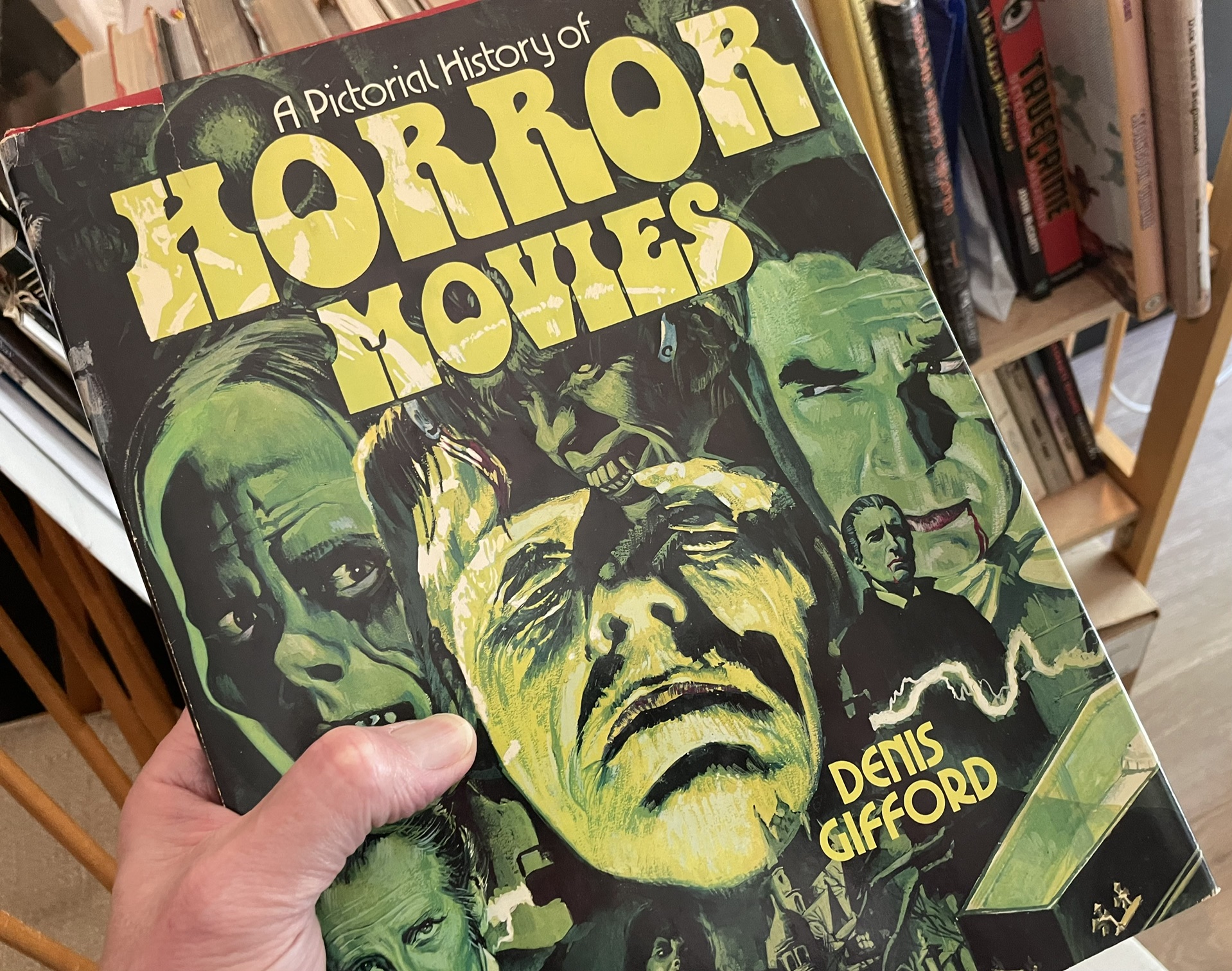
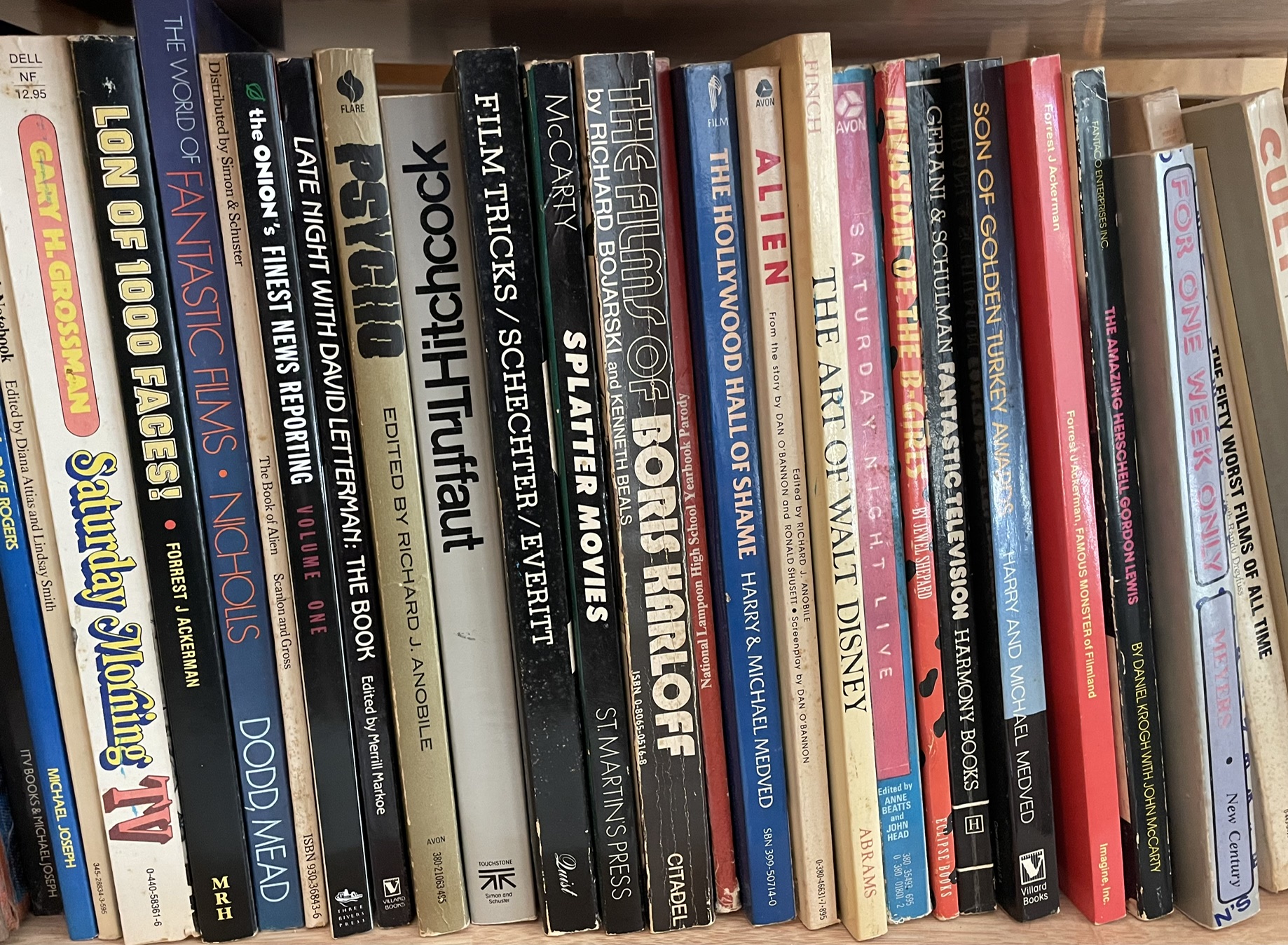
Before I get into details, here’s a picture I just took of one of my several shelves of non-fiction books, very specifically in this case books about movies, TV and entertainment, but we’ve accumulated hundreds of non-fiction books in the past few decades. Pictured above, my copy of Denis Gifford’s “A Pictorial History of Horror Movies” was published in the early 1970s. My copy was published around 1974 and it’s not even the oldest non-fiction book in the house.
It’s accurate to say that I love non-fiction books, history or news or photography or films or Saturday morning cartoons or whatever, and while I don’t buy as many as I used to – I think my latest might be “TCM Underground,” the cult films book released right before TCM canceled the Saturday night/Sunday morning program – but while dozens of boxes of fiction going back to the 1960s are still stored in boxes here, our non-fiction books are mostly but not entirely displayed. Yeah, I love ’em.
And there’s no doubt that online sites have decimated the need for nonfiction magazines and books. Why buy an authoritative book when you can look something up on some possibly totally erroneous online site?
Anyway, Delone’s article, “The Nonfiction Book Market is Collapsing,” carried disheartening news.
The gist of it:
First, the entire industry boomed in Covid—writing is a hobby and reading for pleasure is, too—and has trudged along as it usually does, staying flat, growing a little over the years since 2020. But for the past decade the market for nonfiction has slowly collapsed. What has happened in the last ten years1 is that the overall industry has grown modestly, but fiction and nonfiction have basically flipped positions. In 2015, 6 of the top 25 bestselling hardcover books—this is a not-perfect but useful proxy for new books published—were fiction. In 2025, 18 of the top 25 hardcover books were fiction, meaning only 7 were nonfiction, almost an exact inversion of ten years ago.
Delone emphasizes he’s not writing an Atlantic-style “end of reading, end of books” essay. If you remember, that one alarmed at lot of writers, editors, publishers and readers a while back.
Delone notes that media – which used to be a few big newspaper book review sections and late-night talk shows, where even a Midwestern rube like me could see important authors interviewed by Johnny Carson – is much more decentralized than it used to be and there’s some emphasis placed on book influencers and book accounts on social media. (I follow a bunch of them, for enjoyment more than education, but information nonetheless.)
But he also notes a colossal fall-off in demand for the kind of information we formerly turned to non-fiction books for:
No amount of platform is going to change that interest across the board in nonfiction from celebrities down to science has been slowly disappearing. Even if nonfiction is stable and more predictable than fiction in the abstract, it’s by far worth taking the risk on an unknown novelist if the return is potentially 4x as much. Let’s bring the nonfiction collapse into current day context. Two weeks ago, the entire hardcover nonfiction bestseller list sold 42,000 copies, whereas just the top two bestselling fiction hardcovers the same week—The Calamity Club in its 15th week on-sale and Yesteryear in its 19th week on-sale—sold 52,000 copies. It’s not inconceivable that on the right week, one fiction hardcover with first week sales could outsell the entirety of the hardcover nonfiction bestseller list.
Welp, as the young people used to say.
Want another gulp moment?
The tide going out on nonfiction sales and reading is entirely reshaping the power balance in the industry. Not overnight, but slowly, the money is flowing to fiction and away from nonfiction. It is causing quite a scramble. Fiction is unpredictable, it requires taste, it does not favor the solid metrics or predictability which, if you are running a publishing company, are much more preferable (businesses tend to prefer predictable growth and low volatility or at least high growth alongside high volatility). Fiction is also an easier category for the big publishers to capture and corner the market on. For instance, a handful of talent agencies represent nearly all A-list actors, and therefore a significant supply of big nonfiction bestsellers. The capture in supply carries over to publishers—when is the last time a big celebrity has published a huge bestseller with an indie press?
Delone has a lot of interesting thoughts on the industry. You can find some very thought-provoking posts here:
I’m not sure when someone decided Halloween season kicked off with the beginning of September, but I have no complaints. After all, the Thanksgiving/Christmas/New Years season unofficially begins weeks before Black Friday – probably November 1, actually – and everyone seems to have embraced that.
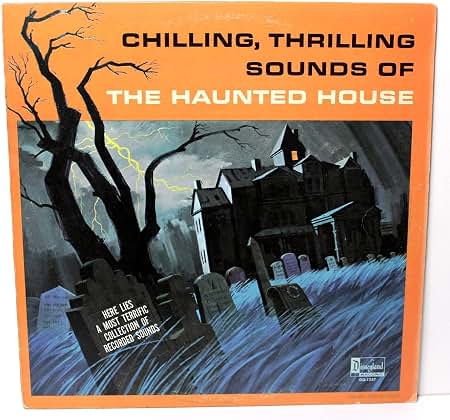
Halloween is one of my favorite holidays and always has been. I love everything about it: memories of trick-or-treating when I was a kid, taking my own kid – and dogs, complete with Superdog cape – trick-or-treating, the Charlie Brown special, the Chilling, Thrilling Sounds of the Haunted House record …
… looking for scary movies on TV to watch during the run-up to Halloween and perusing stores to find funny costumes and decor.
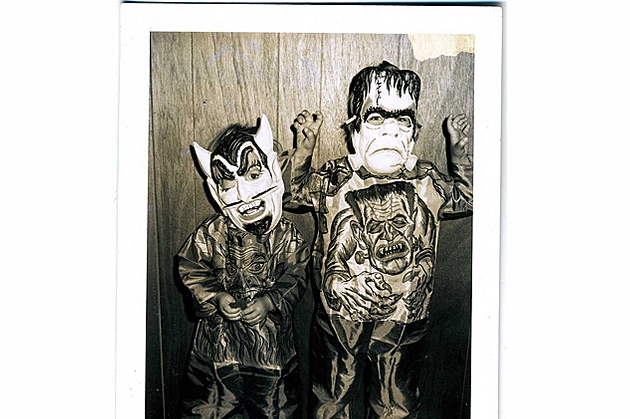
Not to forget vintage Halloween photos.
The memories of trick-or-treating for those of us of a certain age inevitably include memories of the hot, uncomfortable plastic masks and tunics like those in the vintage Halloween picture above. I’m not pictured; I don’t know that my parents ever took a picture of me in a Halloween costume, before I went trick-or-treating with my cousins in their neighborhood, or afterward, when we came home sweaty and disheveled and all sugared up from eating candy before our parents could inspect it for razorblades and LSD.
Anyway, Halloween costumes, memories, movies, sounds and smells (see aforementioned sweaty plastic costumes) are a big part of this site. Here’s a link to my many Halloween posts. Happy spooky season and have a safe and happy Halloween.
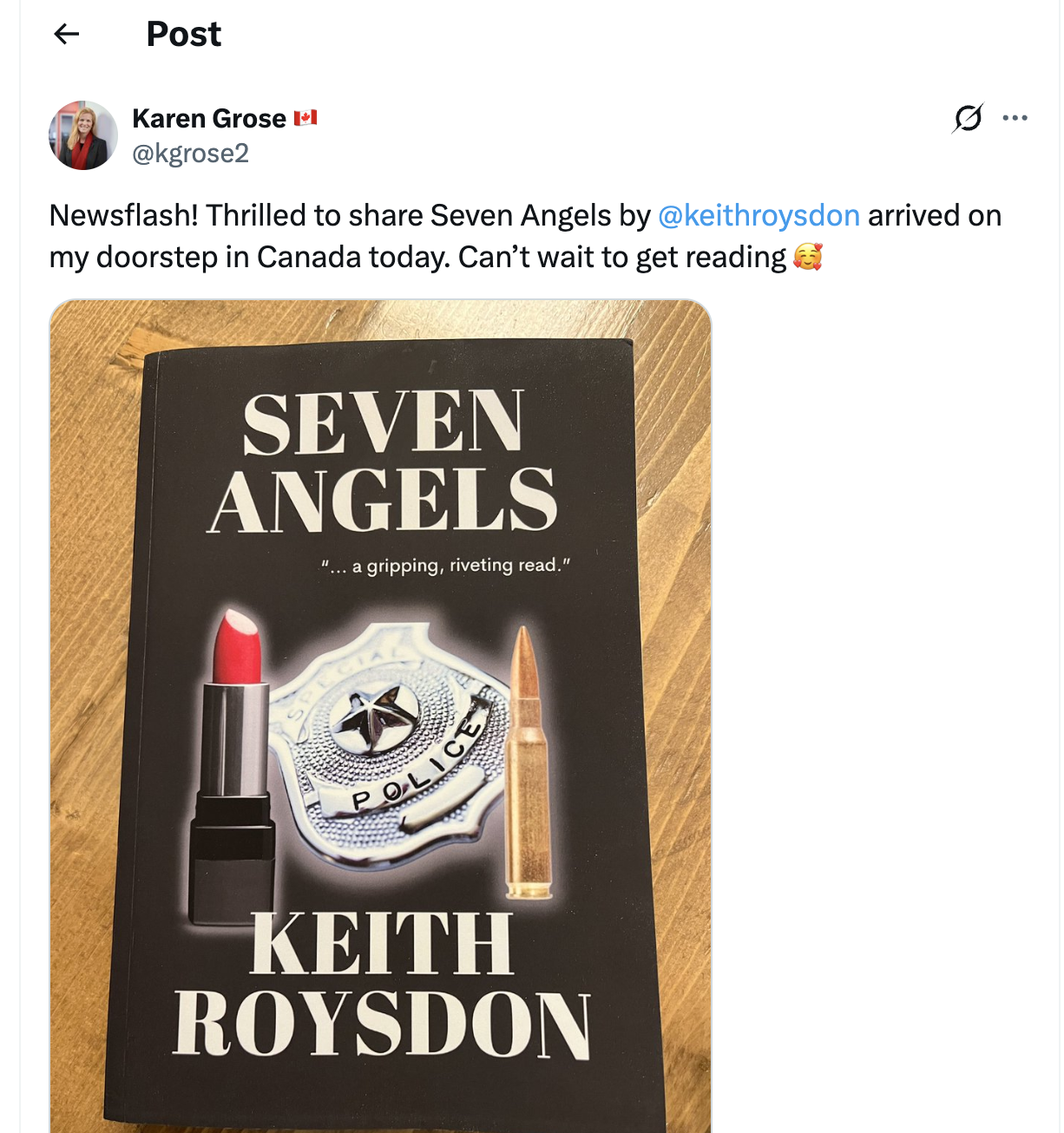
I always enjoy when friends and readers note on social media they’ve received a copy of one of my books, like the new one, SEVEN ANGELS, but I don’t usually post about it here.
Today, I am, because my friend Karen Grose, a rightfully proud Canadian author of several bestselling novels like ALL JUNE LEFT BEHIND and FLAT OUT LIES as well as WHAT WE KEEP SILENT, which is near the top of my Towering To Be Read Stack, posted on social media last night that she’d finallly received a copy of my crime novel SEVEN ANGELS.
Earlier this week, I posted here about my Canadian writer friend, who I’d been talking to for months about why Amazon Canada kept delaying delivery of my book that she’d ordered. I was stumped. Karen was stumped.
Maybe all it took was for me to post about it here, because Karen received the book something like the day after I posted about the delay. I’m certain the two are related, right?
Anyway, I told Karen that I hope she enjoys the book – now that she finally received it – and I’m looking forward to reading hers.
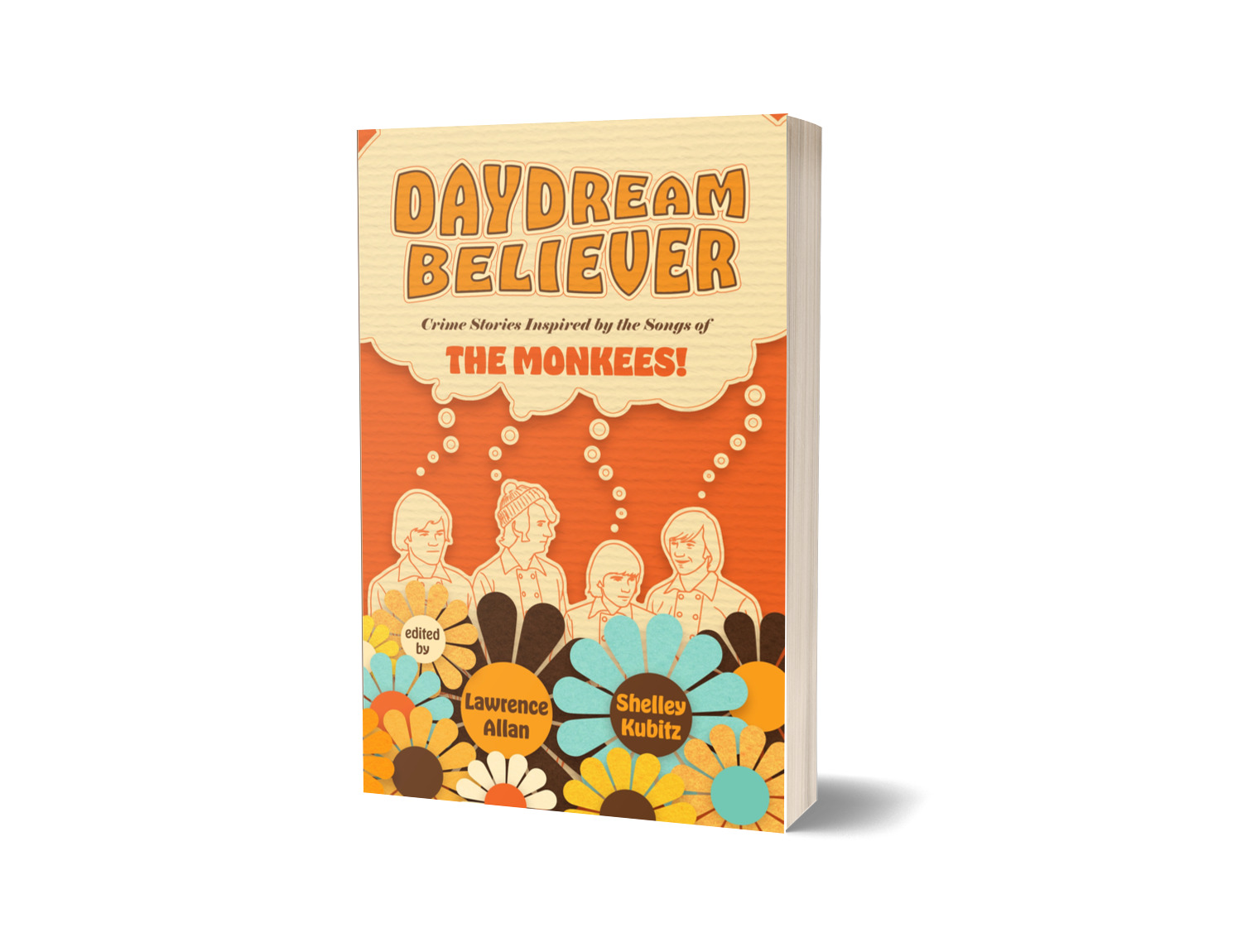
Two of the nicest folks you’d ever want to write for, Shelley Kubitz and Lawrence Allan, today released the cover image for DAYDREAM BELIEVER, an anthology of crime fiction inspired by the music of The Monkees. I’ve got a story in the anthology and I’ll tell you more about it on or before, as they say in legal documents, the book’s publication on September 29. (Or slightly after, depending on how my September goes.)
The table of contents for this anthology is a dream team of crime writers, and I’ll get into that at a later date also.
I’d hoped to have a story in four crime fiction anthologies in 2026, but that was not to be, for reasons too sad to get into here or almost anywhere.
So in 2026, a year in which I definitely de-emphasized short stories to work on novels, I’ve got stories in FIGHTING WORDS, BAD INTENTIONS and DAYDREAM BELIEVER and I couldn’t be happier about that.
The experience of writing short stories in any small bit of spare time I wasn’t working on getting my crime novel SEVEN ANGELS ready for publication by our Constellate Publishing – link at the end of this post – and working on my next three novels, I was inspired me to write an upcoming article for CrimeReads interviewing seven – count ’em! – seven crime writers about what they preferred to write, short stories or novels, and where they love to see their short stories published.
I’ll write more about that and talk about those seven wonderful authors closer to the time the CrimeReads story comes out.
Here’s that link to Constellate Publishing, by the way. We’re still looking for manuscripts of all kinds to consider for publication. We’re offering various editing and marketing services as well.
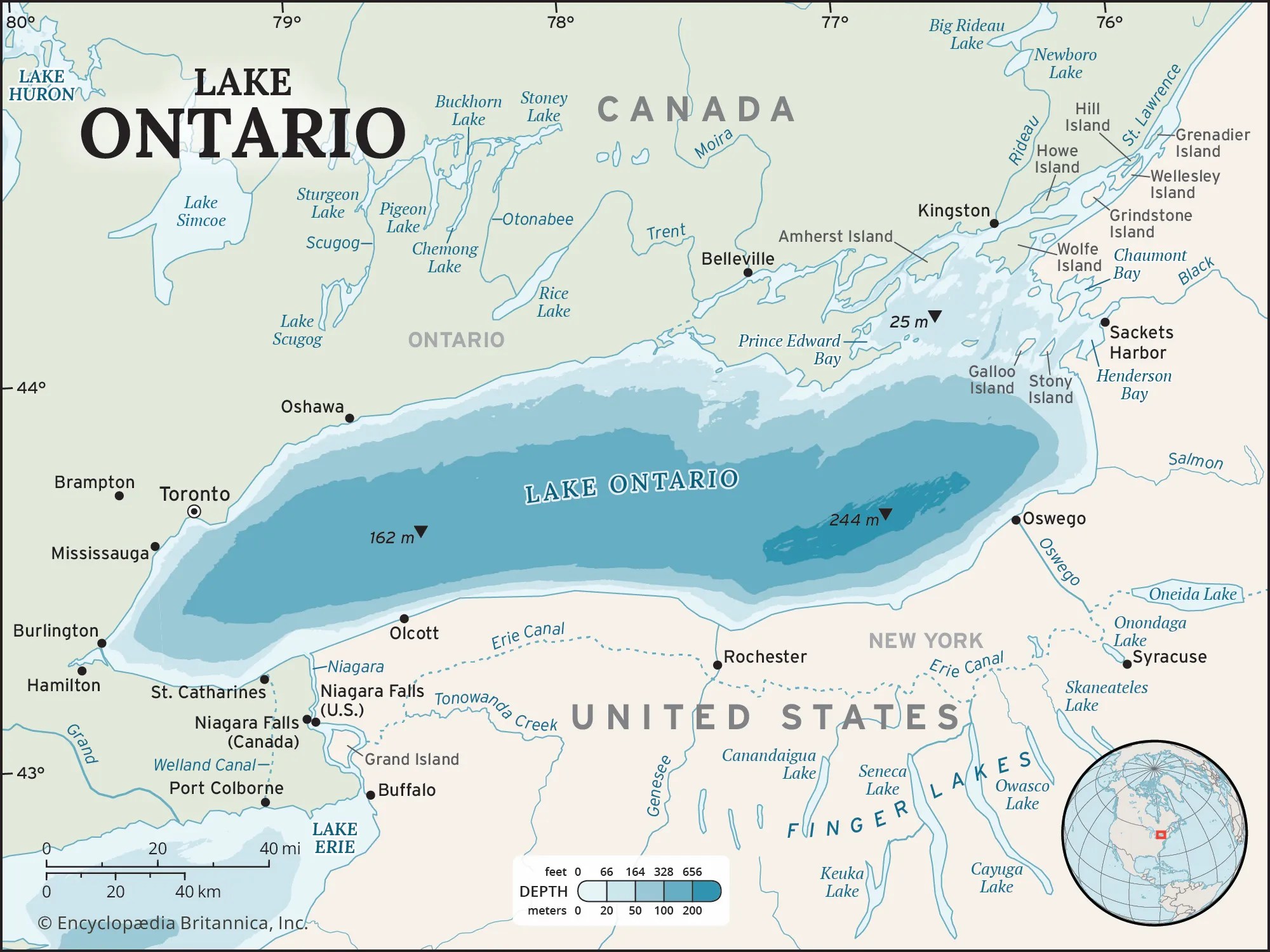
Despite that Britannica drawing of beautiful Lake Ontario, I’ll reassure you up front here that I won’t rehash every element of the idiotic and juvenile threats the current occupant of the White House has made against Canada. I won’t even repeat the ones from just today. Before 2015, I didn’t think it was possible to live in both the stupidest and most depressing and dangerous timeline but that’s the situation we find ourselves in.
But I will note this, and as far as I know, this isn’t the fault of anyone except some nameless, faceless mid-level manager or bureaucrat. I haven’t yet found a simple explanation of why this is the case, but it’s annoying as hell to me and a writer friend who tried to buy a copy of SEVEN ANGELS, my crime novel that came out June 1.
This writer friend in Canada had happily told me that she’d ordered a copy of the book either well before or sometime not long after it went live on Amazon as well as bookshop dot org and Barnes & Noble and many other sites I’d urge anyone to use before considering ordering from Amazon, whose owner has profited from harming smaller, indie booksellers and at the same time undermined democracy with his craven support of the current U.S. president.
Anyway, at some point my writer friend, puzzled, asked if there was any reason why Amazon Canada would be taking so long to send the book. Not that I know of, I replied. Every time I checked, either the American or Canadian Amazon sites, SEVEN ANGELS was available for sale.
Weeks and weeks passed. I checked with her periodically and she still hadn’t received her copy. She’d show me a screenshot of her order form with an inevitably far-future delivery date. And the date slid backward.
This is the status quo last week, ar the end of August, when my friend told me that Amazon Canada was now forecasting a delivery date of October 2 – four full months after the book’s publication date. (Amazon Canada is also charging way more than any U.S. bookseller, but I’m assuming that’s either standard operating procedure or the result of the Rancid Babyman’s tariff tantrums.)
In the meantime, as Amazon Canada was predicting an October 2 delivery for an order placed on August 24, the U.S. version of Amazon was forecasting an August 31 delivery date.
Also in the meantime, my Canadian author friend, after I told her I was going to write a piece titled “Another Reason for Canadians to Hate Us,” replied, “Maybe I should follow up with an article saying We love Americans and would love our neighbours to kindly read our books.”
We love y’all too, my Canadian friend. And we love how you sneak those extra u’s in American words. (Kidding.)
But what’s the reason for this bizarre difference in how this works for Canadian readers?
In November 2024, the site Cybernews reported, “It turns out that if you live in certain countries, you won’t be able to order certain books from Amazon’s US storefront – especially if they revolve around sensitive subjects like erotica, Christianity, the occult, and LGBTIQ issues.
According to The Citizen Lab at the University of Toronto, a laboratory focusing on the openness and security of the internet, Amazon deploys a special system on its “amazon.com” storefront to restrict shipments of certain products to specific regions.
While researchers found more than 17,000 such products, the most common product category restricted was books, especially the ones related to the aforementioned subjects.
In February 2026 on the Amazon forum site, Amazon reported that some ebook purchases are geographically restricted (although this isn’t an e-book issue; the e-book of SEVEN ANGELS isn’t even out yet and will come later this year). A Reddit post also notes that its a roll of the dice to determine if you’ll be able to order some items: you have to enter your Canadian address and then see if your purchase would be deliverable.
A Quora post outlines the absurdity of this situation, advising that while Canadians can order from the U.S. version of Amazon – recognizable by the .com suffix rather than .ca – “If, however, you want to get Amazon U.S. prices and save on customs and brokerage fees, you can do what many Canadians do: time your shopping so you can have the products shipped to a U.S. address while travelling in the U.S. Many hotels, for example, will accept packages for guests (make sure to check first). Along border cities there are many businesses on the American side that simply accept packages for a client and hold them until they can be picked up.”
None of this explains why Amazon Canada continues to offer the books and promises a delivery date that it constantly fails to make.
So do we live in a global economy or not? And can ridiculous threats complicate matters even more?
BTW, I’d have long since just mailed her a copy of SEVEN ANGELS, but the shipping cost would be multiples of the cost of the book itself. And my friend is waiting to see what happens this time to delay her order. But she’s committed to getting her hands on SEVEN ANGELS.
And that’s the sign of a friend, a highly valued thing to have in a time when U.S. leaders seem to be going out of their way to offend as many friends as possible.
I’m by nature an optimist. This might surprise some people when they hear me talk about the seemingly bottomless well of depression and pessimism some people have felt over the past few years. A friend and I were texting this morning and she was more pessimistic than me about the events of the next few weeks. I’m so goddamn optimistic, according to her, you’d think I was delusional. (She didn’t say that, but I’m taking all this to its local extreme.)
The balance of optimistic and pessimistic was already on my mind this morning and I posted on Bluesky that if people could stand the emotional stress they should do an online search for “Black Swan event” and then I asked, “How long is it until the election?”
My friend and I were gaming out what might happen between now and the midterm election in November and I was, admittedly, more optimistic than her. And I cited the reasons I was. And she cited the reasons she wasn’t feeling optimistic.
And the whole thing got me to thinking about research I did in 2025 about a Black Swan event.
I hadn’t heard of a Black Swan event until a few years ago, so I did some research into what exactly it is. I found “The Black Swan: The Impact of the Highly Improbable.,” a 2007 book by Nassim Nicholas Taleb.
What Taleb wrote is that Black Swan events can have either overall positive or negative outcomes but in my mind, a Black Swan event is a negative event.
Over the past 100–plus years, Black Swan events are generally marked by some big, world-changing happenings:
The events leading to and including the outbreak of World War I.
The rise of Adolf Hitler.
The rise of the Soviet Union and the threat of the Cold War.
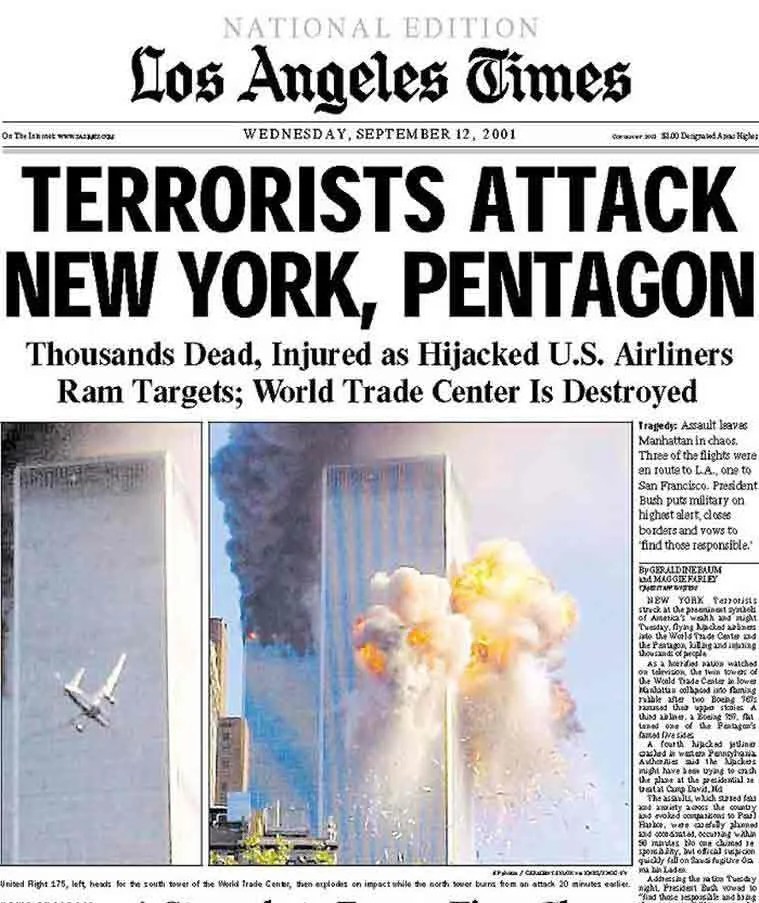
The September 11, 2001 terrorist attacks.
Covid-19.
Some people would add other developments to that list, but the key to Black Swan events is understanding, as Taleb wrote:
What we call here a Black Swan (and capitalize it) is an event with the following three attributes.
First, it is an outlier, as it lies outside the realm of regular expectations, because nothing in the past can convincingly point to its possibility. Second, it carries an extreme impact. Third, in spite of its outlier status, human nature makes us concoct explanations for its occurrence after the fact, making it explainable and predictable.
Some people consider Covid at worst a Grey Swan event and argue the onset of a global pandemic was not at all impossible or unpredictable. It had happened in history, more than once, and countries led by leaders who can reason and think prepared for it.
And Taleb notes:
A small number of Black Swans explain almost everything in our world, from the success of ideas and religions, to the dynamics of historical events, to elements of our own personal lives. Ever since we left the Pleistocene, some ten millennia ago, the effect of these Black Swans has been increasing. It started accelerating during the industrial revolution, as the world started getting more complicated, while ordinary events, the ones we study and discuss and try to predict from reading the newspapers, have become increasingly inconsequential.
I was so fascinated by the topic of Black Swan events – and remain so, obviously – that in 2025 I began outlining and writing a book that includes, as a (hopefully) unexpected plan to precipitate a Black Swan. Even though I shelved the book – it’s not one of the several novels I’m working on now – I still think about it. (I shelved it because I chose an unwieldy format in which to write the book that I couldn’t pull off – but I might be able to pick it back up someday and finish it.)
While a Black Swan event might sound science-fictional to people – and there are classic works of science fiction that fit the Black Swan mold, including the arrival of aliens (the topic of many, many SF tales, books and movies, but one that has stuck with me in the decades since I read it, Arthur C. Clarke’s “Childhood’s End,” a 1953 novel about the impact of the sudden arrival of extraterrestrial beings. – we can see from the examples above that sometimes a Black Swan event can be engineered by a small group of people.
Which brings me back to my conversation with my friend this morning. Because whether any possible Black Swan event is planned by a small group of people – a “false flag” operation can lead to or be part of a Black Swan event – or it’s the sudden arrival of beings from another planet, we can all prepare for the shock of a Black Swan event to greater or lesser degrees. Some people might prepare by laying in a supply of water or non-perishable food. Some want to secure their finances. Others will undoubtedly take other steps.
But knowing that Black Swan events can exist – even if another never comes – is a useful thing.
Writers are always told to “kill your darlings.” That means, of course, that they should learn to be comfortable with cutting lines, paragraphs, chapters and even more if they get in the way of the story. Stephen King famously cut about 400 pages, or 150,000 words, from the manuscript of his magnum opus THE STAND for its original publication. His publisher said the novel was just too long. After THE STAND was hailed as the masterpiece it is, King restored a later edition to something like the original manuscript at 1,152 pages.
I think writers can get in the way of our own success – not only in terms of publication but also story merit – when we’re reluctant to kill our darlings.
That doesn’t make it an easy thing.
I wrote “Door to Door,” published this week by Pistol Jim Press – link at the end of this post – in 2024 for a call for submissions for stories about cults. It got rejected.
So when editor Martine Proctor and Pistol Jim honcho James Maxwell posted a call for stories about doors, portals and gates, it seemed like a good time to revive and sub “Door to Door.”
The only problem? The original was about a third again as long as the 1,000 words or so that the call for subs wanted.
So I cut two or three hundred words. For a story of that length, that’s a lot of dead darlings. It’s not the most I’ve cut from a story, though. I cut some dialogue and I cut a few details, but the point of the story still came through.
I liked the original version of the story and I like the new version. And feedback by people who’ve read it is good.
I should note here that the story was inspired by something that happened in real life: I was home one uncomfortably warm day a few years ago and a young woman came to the door selling magazine subscriptions or something. She literally looked like she was about to faint from the heat and I invited her in and gave her a glass of water.
No murder ensued, however, unlike in the story. No magazine subscriptions ensued either.
I very well might have written some other story for the Pistol Jim call for subs, but it worked out well to give the original, rejected story a shot. Albeit in a slimmed-down version.
Writers should still kill their darlings, especially when it’s necessary. (Says the guy who might publish a 108,000-word novel, GHOST SHOW, in the coming months.)
But even dead darlings can have a new life in some altered form.